Emergency Dentist Near Me: What to Do in the Next 30 Minutes When Tooth Pain Hits
When a tooth suddenly starts throbbing, you do not have time for research, regret, or wishful thinking. You have time for a plan.
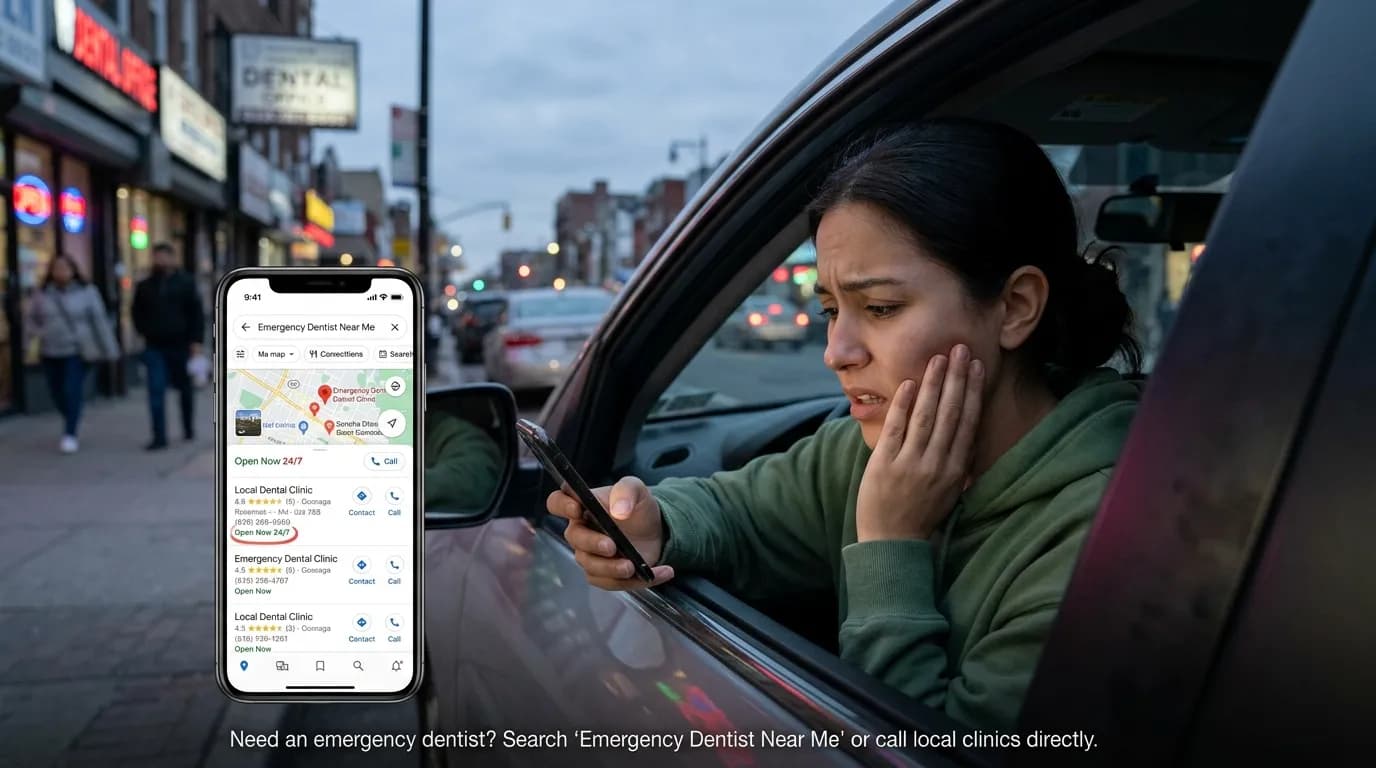
This guide is built for that exact moment: the “tooth pain emergency” that makes you type emergency dentist near me into your phone with one hand while pressing your cheek with the other. We will cover what to do in the next 30 minutes, how to reduce risk while you wait, and how to get the fastest possible urgent dental carewithout guessing.
First: Is This a Dental Emergency or a Medical Emergency?
Some problems are emergency dental care. Others are a medical emergency that involves your airway and needs immediate attention from emergency services.
Call emergency services or go to the ER now if you have:
- Trouble breathing or swallowing, or swelling that is spreading under your jaw/neck
- Fever plus rapidly worsening facial swelling
- Uncontrolled bleeding after trauma or oral surgery
- A facial injury with suspected broken bones, confusion, or severe head injury symptoms
If none of the above applies, you are likely dealing with an urgent (tooth-focused) situation that a dentist is best equipped to treat.
The Next 30 Minutes: A Simple Urgent Dental Care Checklist
When you are in pain, decision fatigue is real. Use this order. It is designed for speed.
Minute 0–5: Identify what is happening (without overthinking)
- Check for obvious triggers: a cracked filling, popcorn kernel, floss stuck, a broken tooth edge, or gum swelling.
- Look for swelling: cheek puffiness, gum “pimple,” or a swollen gum around a tooth.
- Rate the pain: mild, moderate, severe; constant vs. comes-and-goes; worse when biting vs. worse with temperature.
If you are unsure which tooth is involved, use a visual approach. The fastest way to describe pain to a dentist is to point to it.
Minute 5–10: Reduce risk (safe immediate steps)
These steps are commonly recommended for short-term comfort. Follow product labels and your clinician’s guidance, especially if you have medical conditions.
- Rinse gently with warm salt water (do not aggressively swish).
- Cold compress on the cheek in short intervals (10–15 minutes on, then off).
- Avoid heat if there is swelling (heat can worsen some inflammatory situations).
- Avoid chewing on the painful side.
- Do not place aspirin on the gum/tooth (it can burn tissue).
Minute 10–15: Decide if this is “urgent” (same-day) or “soon”
If you are dealing with any of the following, consider it anurgent dental care situation and aim for same-day help:
- Severe pain that is not improving
- Swelling of the gum/face
- A broken tooth emergency (fracture, large chip, or missing chunk)
- Tooth knocked loose or completely out (trauma)
- Bleeding gums with significant pain or swelling
- Signs of infection (bad taste, pus, gum “pimple”)
Minute 15–30: Find emergency dental care fast (and communicate clearly)
When you search emergency dentist near me, you will see ads, outdated listings, and practices that are “open” but not actually available. The goal is to reduce the guesswork.
- Pinpoint the location: Use DentalShelter’s free 3D mouth model to tap the tooth (or gum area) that hurts. This gives you a clear summary you can read to the receptionist or dentist.
- Call with a script: “I have a tooth pain emergency. Pain is severe, started [time], swelling [yes/no], affected area is [tooth]. Do you have urgent appointments today?”
- Use Nearby Practices: DentalShelter’s Nearby Practices tool helps you find the closest clinic right now so you can compare options quickly.
What Causes “Tooth Pain at Night” (and Why It Feels Worse)
Many people notice tooth pain at night ramps up after they lie down. Common reasons include increased blood flow to the head, fewer distractions, clenching/grinding, and inflammation that has had the whole day to build.
Night pain is also a clue that you should not ignore. Persistent, throbbing, or escalating pain can point toward pulp irritation or infection—conditions that often worsen if you wait.
Broken Tooth Emergency: What to Do Right Now
A cracked or broken tooth is one of the fastest routes to “I need an emergency dentist near me,” especially if the break exposes deeper layers of the tooth.
If you chipped or broke a tooth:
- Rinse gently and keep any fragments (they can help the dentist assess the fracture).
- Avoid chewing; choose soft foods.
- If there is a sharp edge, cover it with dental wax if available.
- Seek urgent dental care the same day, especially if there is pain, sensitivity, or visible crack lines.
Tooth Knocked Out? Time Matters
If a permanent tooth is knocked out, you generally have a short window for best outcomes. Handle the tooth by the crown (not the root), and seek emergency dental care immediately.
Specific first-aid steps depend on your situation (age, tooth type, contamination), so call an emergency dentist immediately for guidance.
“Dental Emergency: What to Do” Based on Symptoms
Use this as a quick decision chart.
1) Severe, throbbing pain (especially with heat sensitivity)
Often points to nerve irritation or infection risk. Seek urgent dental care, especially if pain wakes you up.
2) Pain when biting or releasing your bite
Can be crack-related, high filling contacts, or periodontal issues. Same-day evaluation is often justified if pain is sharp.
3) Swelling, gum “pimple,” bad taste
These can be signs of infection. Do not wait. Seek emergency dental care.
4) Lost filling or crown
Sometimes can wait briefly, but if there is pain, temperature sensitivity, or the tooth is cracked, treat it as urgent.
How to Talk to the Dentist So You Get Help Faster
Reception teams triage based on what you say. Clear input helps them schedule you appropriately.
- Where: which tooth / which side (use a 3D model so you do not guess)
- When: start time and whether it is getting worse
- What: throbbing, sharp, sensitivity, swelling, bleeding
- Red flags: fever, spreading swelling, trauma
What to Read Next on DentalShelter
- If you are trying to describe pain more clearly: read Tooth Pain but No Idea What's Wrong? This 3D Mouth Tool Helps You Figure It Out Before Seeing a Dentist
- If you are planning a follow-up visit: How to Prepare for Your Dental Appointment Like a Pro (Using AI Tools Your Dentist Will Thank You For)
Use DentalShelter Right Now
If you are in a tooth pain emergency, do two things now:
- Use DentalShelter's 3D mouth model to pinpoint which tooth is hurting.
- Then use Nearby Practices to find the closest clinic right now.
Frequently Asked Questions
How do I know if I should search “emergency dentist near me”?
If you have severe tooth pain, swelling, a broken tooth, or signs of infection (bad taste, gum pimple), treat it as urgent dental care and look for emergency dental care the same day.
What should I do for tooth pain at night?
Use a cold compress, avoid chewing on the sore side, and consider a gentle salt-water rinse. If pain is severe, throbbing, or waking you up, it is a strong reason to seek urgent dental care.
Is a broken tooth an emergency?
A broken tooth emergency often needs same-day evaluation, especially if there is pain, temperature sensitivity, or a large fracture. Small chips without symptoms may be less urgent, but should still be checked.
Can DentalShelter diagnose a dental emergency?
DentalShelter can help you describe and document what you are feeling by pinpointing the tooth or gum area in a 3D mouth model. It does not replace an exam, but it helps you communicate faster and more clearly when you contact a clinic.
How quickly should I get emergency dental care for swelling?
Swelling can indicate infection. Same-day evaluation is typically the safest choice. If you also have fever, spreading swelling, or trouble breathing or swallowing, seek emergency medical care immediately.