How Patients Are Finding Dental Practices Online — And Why Your Clinic Needs to Show Up
The way people find a dentist has changed. “Word of mouth” still matters, but most patients now start with a search box—even when a friend recommends a clinic.
This article breaks down what discovery looks like today for patients and what it means for dentists. If you have ever wondered why you are not getting found for best dentist near me ordentist near me accepting new patients, the answer is often in the details: listings, reviews, relevance signals, and the patient’s intent pathway.
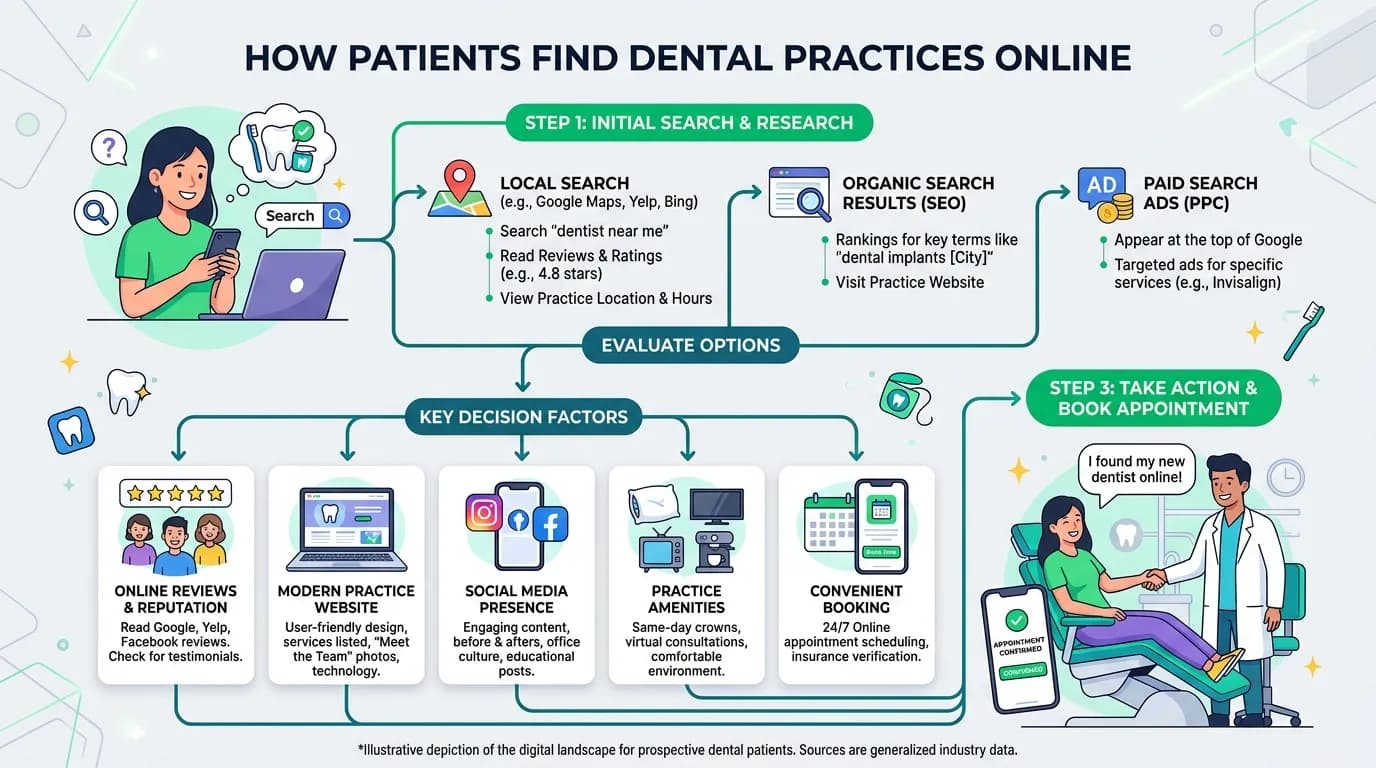
For Patients: The Modern “How to Find a Dentist” Checklist
If you are trying to figure out how to find a dentist, you are likely doing a few steps—sometimes without noticing.
1) Search: “best dentist near me” (or a problem-specific query)
Patients often search based on intent:
- Routine: “dentist near me”
- Trust: “best dentist near me”
- Urgent: “emergency dentist near me”
- Policy: “accepting new patients”
2) Compare: hours, location, and availability
Patients filter quickly based on convenience and whether a clinic can actually see them.
3) Validate: dentist reviews near me
Reading dentist reviews near me is now standard. Patients tend to look for patterns: communication, pain management, billing clarity, and whether the office feels respectful.
For Dentists: What Actually Drives Online Discovery
1) Google Business Profile dentist basics
Your Google Business Profile dentist listing is often your front door. If it is incomplete, inconsistent, or outdated, you lose visibility.
- Accurate name, address, phone (NAP consistency)
- Correct categories and services
- Updated hours (especially holiday and emergency hours)
- High-quality photos
- Review responses that sound human and professional
2) Dental practice marketing is now “trust marketing”
Modern dental practice marketing is less about slogans and more about reducing uncertainty:
- Transparent pricing ranges and financing clarification
- Clear services and whether you accept new patients
- What an emergency visit looks like
- Friendly explanation of what to expect
Where DentalShelter Changes the Funnel
DentalShelter combines symptom clarity with discovery. Patients can use the 3D model or AI scan to understand what might be happening, then use Nearby Practices to find clinics.
That means dentists have the opportunity to reach patients at a very specific moment: after symptom concern becomes intent.
Related Articles
- Patients in pain: Emergency Dentist Near Me: What to Do in the Next 30 Minutes
- Choosing a provider: How to Find a Good Dentist Near You
Calls to Action
Patients: Use DentalShelter's Nearby Practices to find a clinic before you book.
Dentists: Get listed on DentalShelter and reach patients who have already checked their symptoms.
Frequently Asked Questions
How do patients find the best dentist near me?
Most patients search, compare distance/hours, read review patterns, and look at a clinic’s Google Business Profile. They often choose the office that reduces uncertainty with clear information.
Do dentist reviews near me really matter?
Yes. Reviews influence trust and click-through. Patients look for consistent mentions of communication, gentleness, and billing clarity.
What should dentists prioritize online?
Accurate Google Business Profile details, updated hours, clear services, and review engagement. Also, show up where patients are searching after they check symptoms—like DentalShelter.
What is the benefit of being listed on DentalShelter?
You reach patients at the moment they have intent, and many arrive better prepared because they have already used symptom tools.