
Root Canal vs. Tooth Extraction: How to Choose the Right Option for Your Smile
When a tooth is severely decayed, cracked, or infected, you are often faced with a critical decision: should you try to save it with a root canal, or is it better to have a tooth extraction?
Both procedures are common, but they have completely different workflows, long-term outcomes, and financial implications. In this guide, we break down the clinical differences, cost expectations, and recovery details to help you make an informed choice.
The Core Difference: Saving vs. Replacing
The fundamental distinction comes down to one goal: keeping your natural dentition.
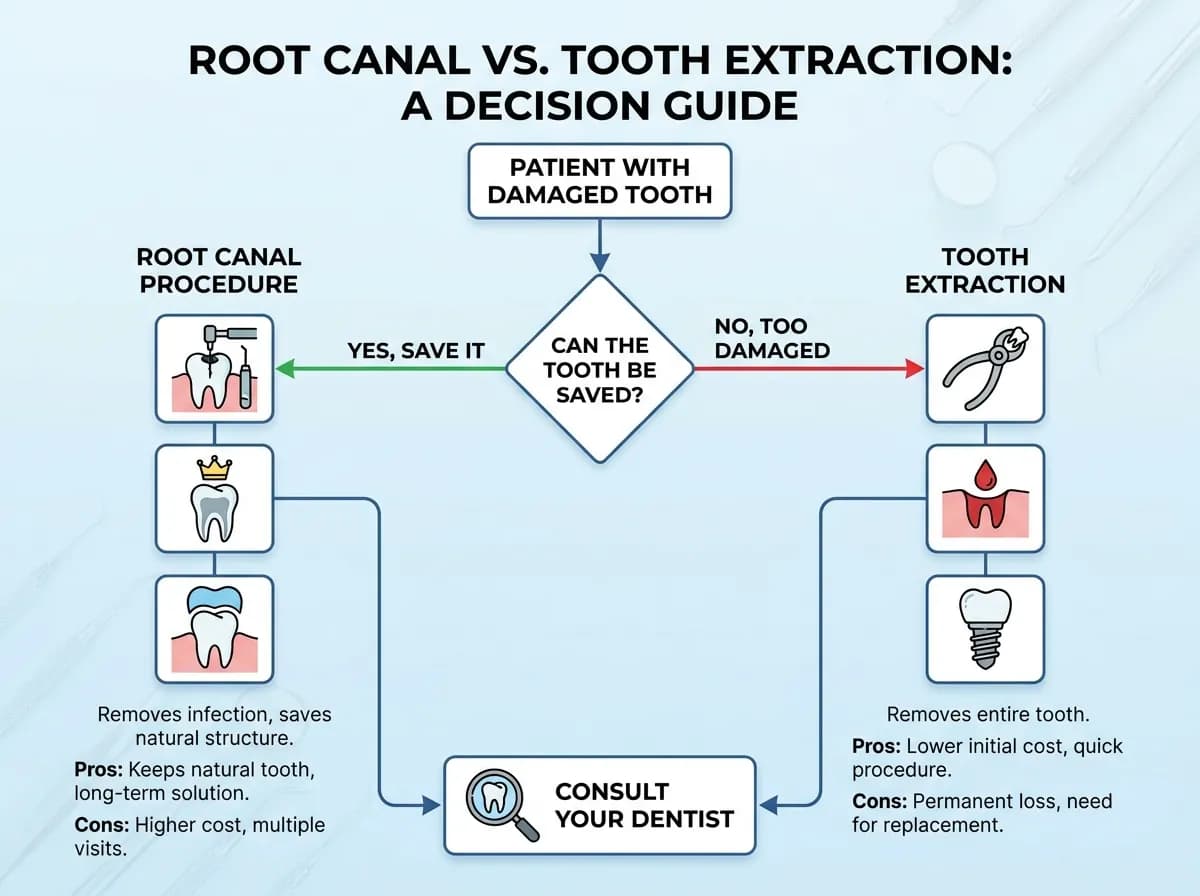
- Root Canal Therapy: A conservative procedure aimed at saving the tooth structure. The infected pulp is removed, the root canal system is sanitized, and the space is sealed. Usually, a crown is placed afterward to restore strength.
- Tooth Extraction: A surgical procedure where the entire tooth is removed from its socket in the bone. Once extracted, you must consider tooth replacement options like implants or bridges to prevent adjacent teeth from shifting.
Clinical Breakdown of a Root Canal
Many patients fear a root canal due to outdated myths, but modern anesthetics make the procedure no more uncomfortable than receiving a standard filling.
Step-by-Step Procedure
- Anesthesia: The dentist numbs the affected area completely.
- Access: A small opening is made in the chewing surface of the tooth to access the pulp chamber.
- Cleaning: Specialized files remove dead, decayed, or inflamed nerve tissue and bacteria.
- Filling: The canals are filled with a biocompatible material (gutta-percha) and sealed.
- Restoration: Because a root canal tooth becomes brittle over time, a custom dental crown is typically placed to protect it from fracturing.
The primary benefit of a root canal is that you retain your natural tooth root. This maintains normal chewing forces, preserves the surrounding jawbone, and avoids the need for prosthetic replacements.
Clinical Breakdown of a Tooth Extraction
When a tooth is cracked below the gumline or has lost too much healthy structure, a tooth extraction becomes necessary.
Procedure & Replacement Pathways
During an extraction, the dentist gently loosens the tooth and removes it. While this solves the immediate pain of an infected tooth, it creates a new challenge: a gap in your smile.
An empty socket can lead to bone loss in the jaw and cause neighboring teeth to drift, altering your bite. To prevent this, dentists recommend replacing the extracted tooth with a:
- Dental Implant: A titanium post placed in the bone that acts as a new root, topped with a custom crown.
- Dental Bridge: A prosthetic tooth suspended between two healthy teeth that have been capped.
Comparing Costs, Time, and Longevity
While a tooth extraction is initially less expensive than a root canal, the long-term costs tell a different story.
A root canal plus a crown can cost more upfront, but it preserves your tooth for decades. An extraction is cheaper, but if you add the cost of a dental implant or bridge to replace the missing tooth, the total expense is often double or triple that of saving the tooth.
How to Make the Choice
Consider the following factors when discussing options with your dentist:
- Prognosis: If the tooth has a high success rate with a root canal, saving it is almost always the best biological choice.
- Location: Saving a front tooth is highly desirable for aesthetic reasons, while a non-functional wisdom tooth is typically extracted.
- Timeline: An extraction is a quick fix but requires multiple visits if you opt for an implant later. A root canal usually takes 1 to 2 appointments.
How Dental Shelter Helps You Navigate This Choice
Unsure which tooth is causing pain or what symptoms you are experiencing? Use the free interactive 3D mouth model at Dental Shelter to pinpoint the exact tooth, note your symptoms (such as temperature sensitivity or chewing pain), and generate a clear summary. You can then use this summary when discussing your treatment options with a professional.
If you need to find a dentist near you to get a clinical evaluation, browse verified clinics at First Stop Dental to secure an appointment quickly.
Frequently Asked Questions
Is a root canal painful?
With modern local anesthetics, a root canal is highly comfortable and feels very similar to getting a deep filling. The procedure is designed to relieve pain caused by infection, not cause it.
What happens if I extract a tooth and do not replace it?
Leaving a gap can cause neighboring teeth to tilt or shift into the empty space, disrupting your bite. Additionally, the jawbone in that area will gradually resorb (shrink) over time.
How long does a root-canaled tooth last?
With proper restoration (a crown) and good oral hygiene, a tooth treated with a root canal can last a lifetime.
When is a root canal no longer an option?
If a tooth is fractured below the gumline, has severe vertical root cracks, or has suffered extensive bone loss around its roots, it cannot be saved and must be extracted.