
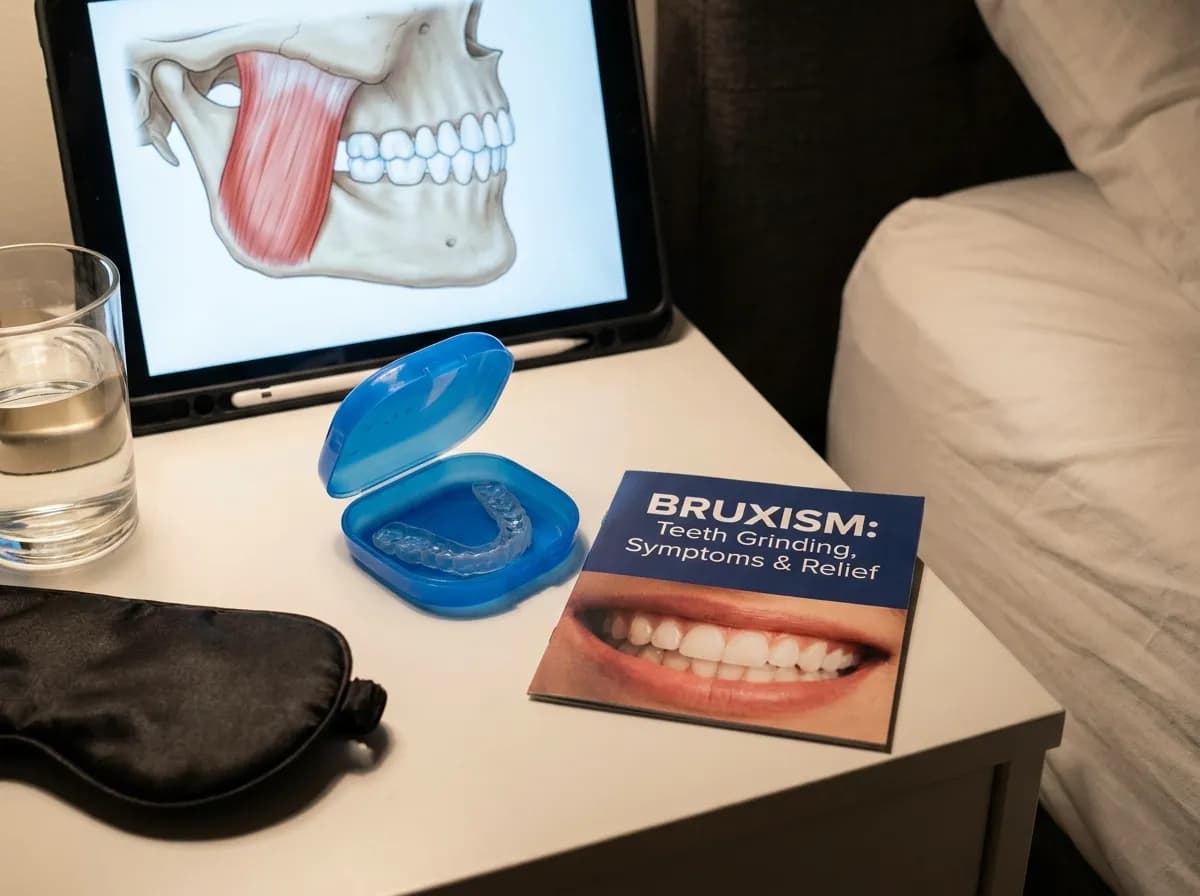
How to Stop Teeth Grinding (Bruxism) Before It Causes Severe Damage
Many people grind their teeth or clench their jaws occasionally without noticing. However, when this habit becomes chronic—a condition known as bruxism—it can lead to fractured enamel, jaw disorders, chronic headaches, and facial pain.
Because teeth grinding most commonly occurs during sleep (sleep bruxism), many patients have no idea they are doing it until a bed partner hears the sound or a dentist notices unusual wear on their teeth. In this guide, we discuss the symptoms of bruxism, how it damages your smile, and how a dental night guard can protect your teeth.
What Causes Teeth Grinding?
Bruxism can be triggered by a combination of physical, psychological, and genetic factors:
- Stress and Anxiety: High stress levels are the leading cause of awake and sleep bruxism.
- Bite Misalignment: Teeth that do not meet properly when the mouth closes can trigger grinding.
- Sleep Disorders: Bruxism is linked to sleep apnea, which causes brief interruptions in breathing.
- Lifestyle Factors: Caffeine, alcohol, smoking, and certain medications (specifically antidepressants) can increase grinding activity.
Common Bruxism Symptoms: Are You Grinding?
If you grind your teeth at night, you may notice one or more of these symptoms upon waking:
- Dull headaches starting in the temples, often mistaken for sinus headaches.
- Sore, tight jaw muscles or difficulty opening your mouth fully.
- Unexplained pain in your ears, neck, or upper shoulders.
- Increased tooth sensitivity to hot, cold, or sweet foods due to worn enamel.
- Teeth that look flattened, fractured, chipped, or loose.
- Clicking or popping sounds in your jaw joint (TMJ).
How Bruxism Damages Your Teeth and Jaw
The forces generated during sleep clenching can be up to three times stronger than normal chewing forces. Over time, this intense pressure causes:
- Enamel Attrition: The protective enamel layer is physically worn away, exposing the yellow, sensitive dentin layer underneath.
- Tooth Fractures: Chronic grinding can split teeth, break existing fillings, and crack expensive crowns.
- TMJ Disorders: The constant strain on the temporomandibular joints (TMJ) can lead to chronic pain, popping, or jaw locking.
- Gum Recession: The flexing of the tooth under extreme pressure can weaken the bone support and cause gums to recede.
The Solution: Dental Night Guards and Bruxism Relief
While addressing the underlying cause (like stress or sleep apnea) is ideal, the immediate priority is protecting your teeth from physical damage.
Custom Dental Night Guard: The Gold Standard
A custom dental night guard is fabricated from a precise model of your teeth. Made of durable, medical-grade acrylic, it fits snugly over your upper or lower teeth, creating a barrier that absorbs the grinding forces. It prevents tooth-on-tooth contact, allowing your jaw muscles to relax.
While cheap over-the-counter guards are available, they are bulky and can actually worsen grinding by altering your bite. A custom guard is thin, comfortable, and engineered to protect your specific jaw joints.
Stress Management and Therapy
For stress-induced bruxism, activities like meditation, yoga, or cognitive behavioral therapy (CBT) can help. Cutting down on caffeine and alcohol before bed can also reduce muscle activity during sleep.
Diagnose Your Symptoms with Dental Shelter
If you suspect you are grinding your teeth and notice wear or jaw soreness, open Dental Shelter's free 3D mouth model. Zoom in on the molars and chewing surfaces, select the teeth that feel sensitive or worn, and mark "grinding/clenching" under symptoms. This helps you build a detailed picture of your symptoms.
To get a custom night guard made, search for verified dentist listings on First Stop Dental to secure an appointment.
Frequently Asked Questions
Is teeth grinding normal in children?
Yes, child bruxism is very common, particularly when baby teeth and permanent teeth are erupting. Most children outgrow it naturally by their teenage years without needing a night guard.
How long does a custom night guard last?
A custom dental night guard typically lasts between 3 and 5 years, depending on the severity of your grinding habit.
Can Botox help with jaw clenching?
Yes. Botox injections into the masseter (chewing) muscles can temporarily relax them, significantly reducing the intensity of grinding and clenching without affecting your ability to eat or speak.
Why does clenching cause ear pain?
The jaw joints (TMJ) sit directly adjacent to your ear canals. Inflammation in the TMJ caused by nighttime clenching can radiate pain directly into your ears.