
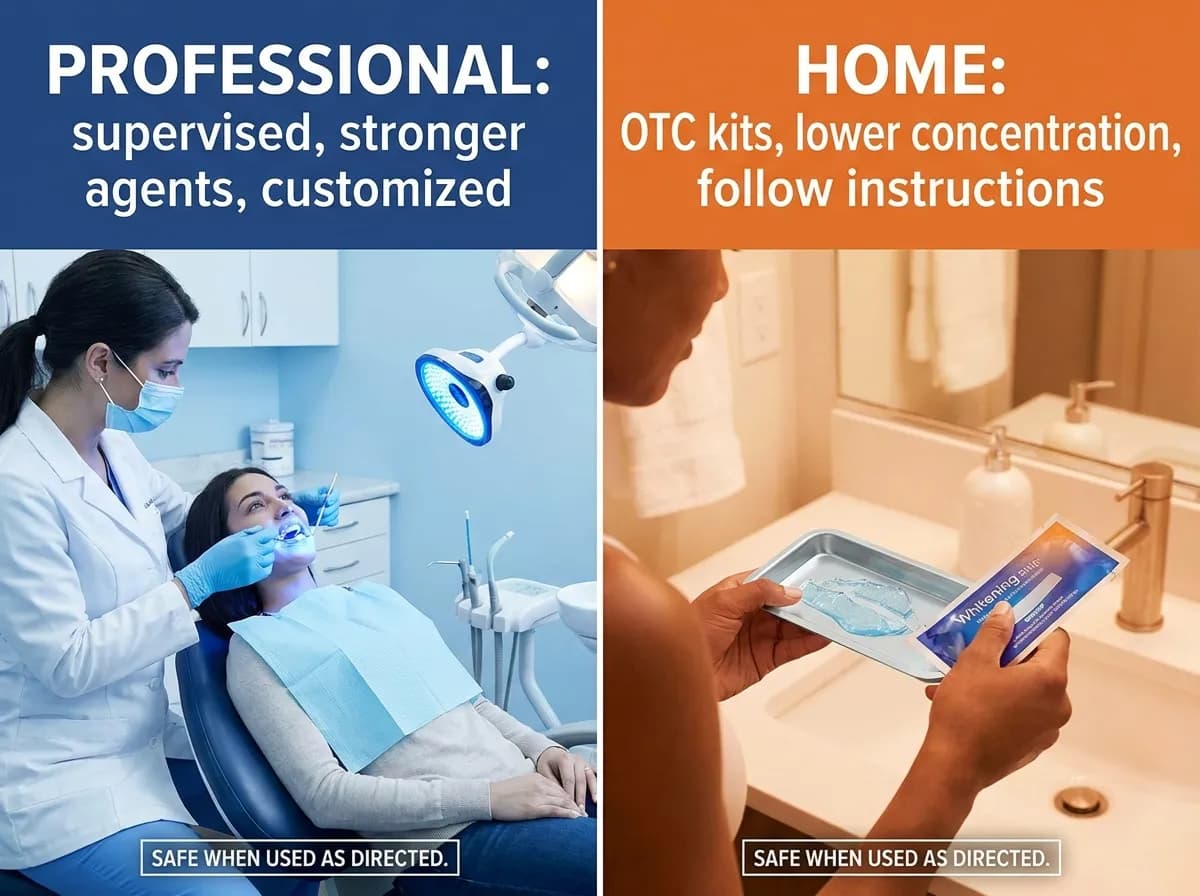
The Truth About Teeth Whitening: Safe at-Home vs. Professional Methods
A bright, white smile is often associated with youth, health, and vitality. As a result, teeth whitening has become the most popular cosmetic dental procedure in the world. However, with hundreds of over-the-counter products, charcoal pastes, and in-office treatments available, it can be difficult to know what is actually safe and effective.
Using the wrong whitening methods can permanently damage your enamel or lead to severe tooth sensitivity. In this guide, we break down the science of tooth discoloration, evaluate the safety of at-home vs. professional teeth whitening, and provide tips for whitening sensitive teeth.
Why Do Teeth Turn Yellow?
To choose the right treatment, it helps to understand why your teeth have discolored. There are two main types of staining:
- Extrinsic Stains: Stains on the outer surface of the enamel. These are caused by dark-colored foods and beverages (like coffee, tea, red wine, cola), smoking, and poor brushing habits.
- Intrinsic Stains: Stains within the inner structure of the tooth (the dentin). These can be caused by aging, trauma, excessive fluoride intake during childhood, or exposure to certain medications (like tetracycline).
Extrinsic stains can easily be removed with surface polishing or bleaching, whereas intrinsic stains require deep chemical bleaching to penetrate the dentin.
Comparing Whitening Methods
Let's compare the most common whitening methods for efficacy and safety:
1. In-Office Professional Whitening
Performed by a dentist, this is the fastest and most controlled method. The dentist applies a highly concentrated hydrogen peroxide gel (35% to 40%) directly to the teeth. A specialized light or laser is often used to activate the gel, breaking down stains in about an hour.
- Pros: Immediate results (up to 8 shades lighter), custom gum barriers protect soft tissues from chemical burns.
- Cons: Highest cost; can cause temporary sensitivity.
2. Dentist-Supervised Take-Home Trays
Your dentist takes an impression of your teeth to create custom-fit plastic trays. You fill these trays with a professional-grade carbamide peroxide gel and wear them for 30 to 60 minutes a day for about two weeks.
- Pros: Custom trays prevent the gel from leaking onto your gums; gradual, highly effective results.
- Cons: Takes longer than in-office treatment; requires compliance.
3. Over-the-Counter Strips and Gels
These products use low-concentration bleaching agents on thin plastic strips.
- Pros: Low cost, convenient.
- Cons: The generic shape of the strips does not adapt to every tooth surface, leading to uneven whitening. Saliva can wash the gel onto the gums, causing irritation.
4. Natural Remedies: A Word of Caution
Popular remedies like activated charcoal, baking soda, and lemon juice can actually do more harm than good. Charcoal and baking soda are highly abrasive and physically scrub away enamel, exposing the yellow dentin underneath and making your teeth permanently darker. Acidic rinses (like lemon juice) dissolve enamel directly.
Safe Whitening for Sensitive Teeth
Bleaching agents open microscopic pores in your enamel, allowing the peroxide to reach the nerve pathways, which causes temporary sensitivity. If you are prone to sensitivity, follow these tips:
- Use a desensitizing toothpaste containing potassium nitrate for two weeks before whitening.
- Opt for dentist-supervised trays where the gel concentration can be lowered.
- Limit your whitening sessions to every other day.
- Avoid extremely hot or cold drinks during and immediately after your whitening treatment.
Use Dental Shelter to Plan Your Smile Care
If you have sensitive teeth and are worried about whether whitening is safe for you, open the free 3D mouth model at Dental Shelter. Mark the sensitive teeth on the model, note the severity of your sensitivity, and save the report. You can present this information during your next visit to help your dentist select a gentle whitening agent.
Ready to consult with a cosmetic dentist for professional whitening? Search verified local practices at First Stop Dental.
Frequently Asked Questions
Will teeth whitening damage my enamel?
When performed or supervised by a dentist using approved products, teeth whitening is highly safe and does not damage enamel. However, using abrasive DIY treatments or over-whitening can cause permanent damage.
Can you whiten crowns, veneers, or fillings?
No. Bleaching agents only work on natural tooth structures. Porcelain veneers, dental crowns, and composite fillings will not change color during whitening, meaning they may need to be replaced after whitening to match your new shade.
How long do teeth whitening results last?
Typically, whitening results last between 6 months and 2 years, depending on your lifestyle. Avoiding dark-colored beverages, quitting smoking, and touching up with custom trays can extend the results.
How can I get rid of yellow teeth naturally?
The safest natural remedies are preventative: brush twice daily, floss daily, use a straw for iced coffee or tea, and rinse your mouth with water immediately after consuming acidic foods.